
This Mental Health Month, the theme is “a little connection goes a long way”. To explore what that means in practice, we sat down with Jay Gardener, New Horizons’ new Lived Experience Lead.
Lived Experience leadership is a new role at New Horizons, but it isn’t a new role for the mental health system, and it isn’t the only role that has tried to do this work. Jay is clear that this is part of a much larger legacy and movement of people who have done, and are still doing, this work.
Jay’s own path into it began in mental health rehab, in a moment with a peer worker. In our conversation, Jay talks about that moment, what “lived and living experience” means, why change moves at the speed of trust, and small ways anyone can connect with others.
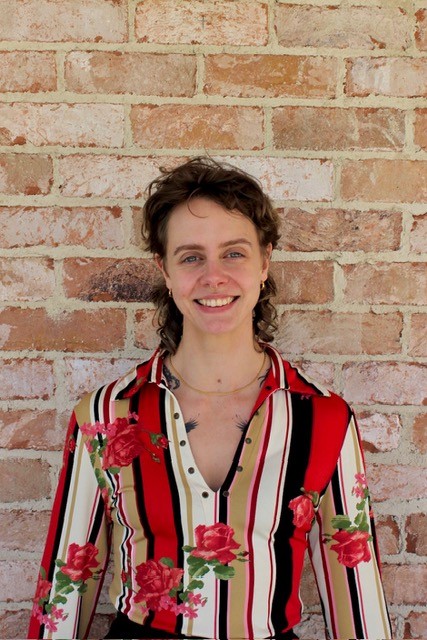
Jay Gardener, lived experience lead
Thanks for joining us, Jay. Tell us, why do you do this work?
Not that long ago I was sitting in mental health rehab, and across from me was a peer worker. For the first time, I didn’t feel like a case note, and I didn’t feel judged. They just sat with me. I’d never met a peer worker before. When I think about it, I really believe it’s relationships that start a catalyst for change for a lot of people. Being seen and heard in a moment is important, and I’m here because of that one moment with a peer worker.
What does “lived and living experience” mean to you?
“Lived and living experience” can feel misunderstood sometimes. The word “recovery” can feel like there’s a place “over there” that I need to get to. “lived” has the same problem – it’s in the past – so the current language being adopted is “lived” and “living”. It’s happening now, and in some ways that’s stigma and discrimination busting. living experience is a non-linear journey.
Lived and living experience is a practice and an expertise, and it’s deeply connected to social justice movements, human rights and solidarity. It moves out of the “i” and into the “us,” so means something different depending on the lens!
When you hear the theme for Mental Health Month, “a little connection goes a long way”, what comes to mind?
I’ve been really firm that I don’t want to do anything too quickly [in this new role]. I want to listen, learn, meet people and be meaningfully relational. Operating from a learned and lived perspective is important – I’m grateful to have some education in systems change and adaptive leadership – but change moves at the speed of trust, always. Being relational is an important and critical practice, and it’s a skill set in its own right.
“A little connection goes a long way” sounds so simple, but when you stop and think about it, what does it mean to stop and listen without judgement? Really deep listening? Seeing and hearing someone without just waiting for your turn to speak? These are all characteristics of the peer workforce, and they’re deep practices. It’s a very textured, layered slogan for Mental Health Month.
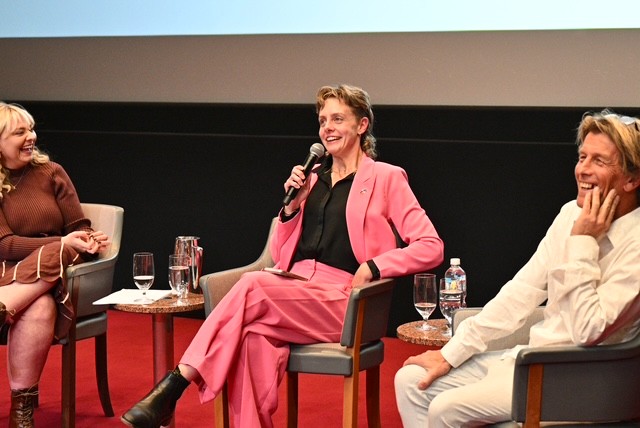
Jay at the Peers at the Table Podcast launch at Parliament House Canberra. Photo by Kristine Laird.
Why is connection so powerful for someone who’s struggling?
I can only speak from my own experience. Sitting with that peer worker, I felt deeply disconnected, but it was a self-made prison. I felt disconnected from myself. Someone was trying to reach in, and in the health system, being connected had meant being harmed.
What peer workers really do is start to repair some of those harms. For me, sitting with that peer worker started to heal my disconnection from myself. It let me be more self-compassionate and self-curious. Before that, I didn’t have any of that.
What are some small, everyday things people can do to connect with someone?
You can’t connect if you’re disconnected from yourself, so it starts with self-inquiry. One of the core conditions is: is it safe to do so? Sometimes it’s about practicing when the stakes are low. Can you let someone pass you on the bus, or stand up for someone, or offer a small gesture? The further along the scale of connection you go, the more vulnerability it takes.
Approaching a colleague might be too much, but you could write them a sticky note saying you hope they’re having a good day. Connection is a series of opportunities. It doesn’t always have to be “let’s spill our deepest, darkest secrets”.
What would you like people to take away from Mental Health Month?
I think Mental Health Month is about taking stock, individually and collectively, of the wins and successes of the last year, or whatever period feels meaningful. It’s also about making a firm commitment until the next one comes around. It’s not just 31 days. Otherwise it can feel tokenistic and tired. A pragmatic approach is: here are some wins from the last year, and here are some commitments for the next.
Thanks, Jay. Here’s to a little connection, all year round.
Thanks!